In 2018 I wrote a blog called Park Life. In the first part I sat on a bench in a park and cried. We were with friends and even although the park claimed to be inclusive there was absolutely nothing for Quinns to play on. The second part of that blog described the day we visited a more inclusive playpark and discovered that wheelchair-accessible roundabouts and other accessible equipment existed. Being new to disability I had no idea about accessible play equipment.
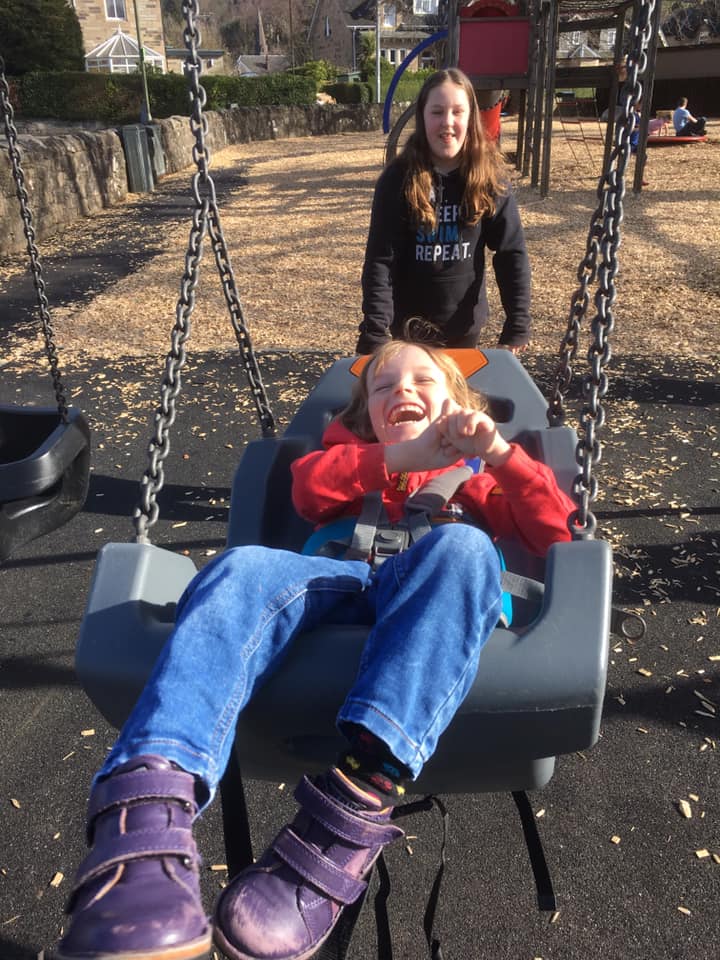
This revelation took us on a journey to discover the best accessible play equipment and inspired us to take on a fundraising campaign to make our local play park more accessible and a great place for Quinns and everyone to play in. We succeeded in all we planned to do and finally everything was installed in 2023. Quinns has subsequently had many fun times in that park and hopefully he still has a few to come although he is maybe getting a bit too old for it!
I, however, am still frustrated when I see new or refurbished parks that don’t contain accessible play equipment. In my original blog I dreamt about an accessible roundabout in every park. I now think that is the absolute minimum and there could be so much more done with wheelchair-accessible play equipment. Afterall making the play equipment accessible to disabled children doesn’t exclude other children.
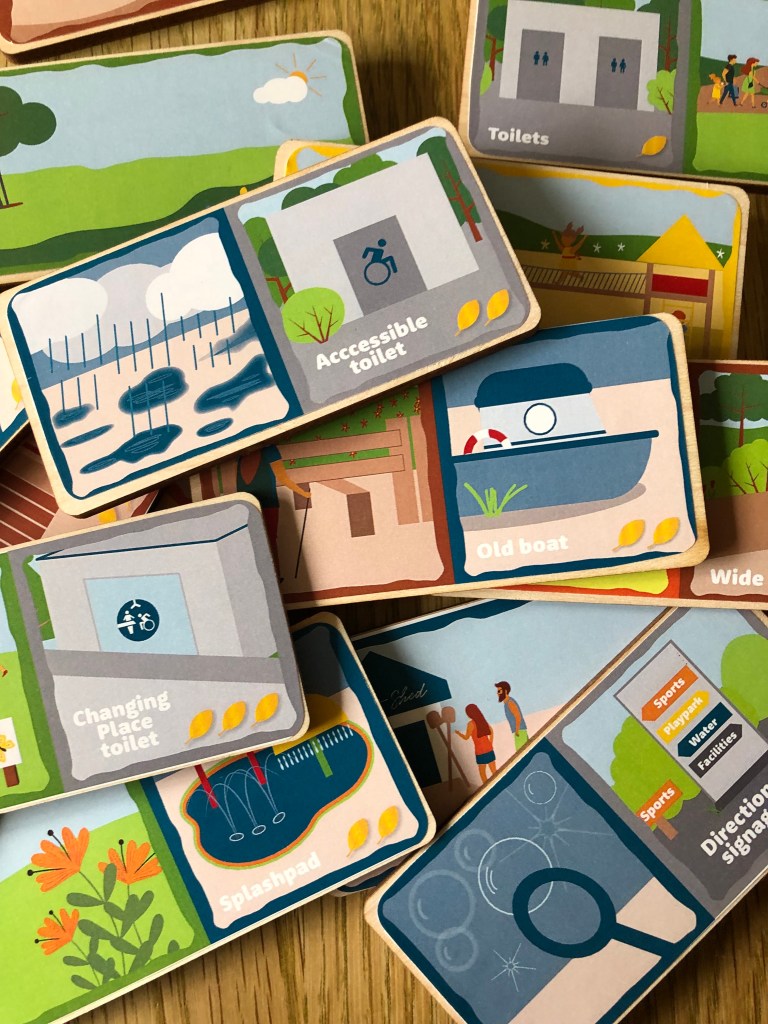
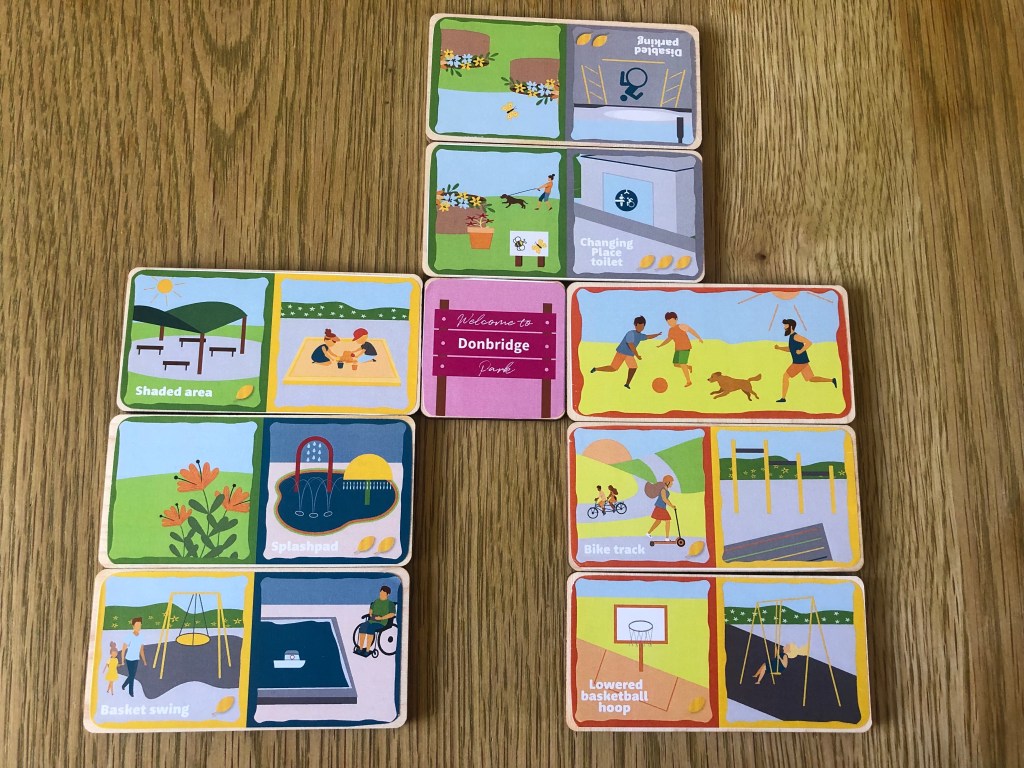
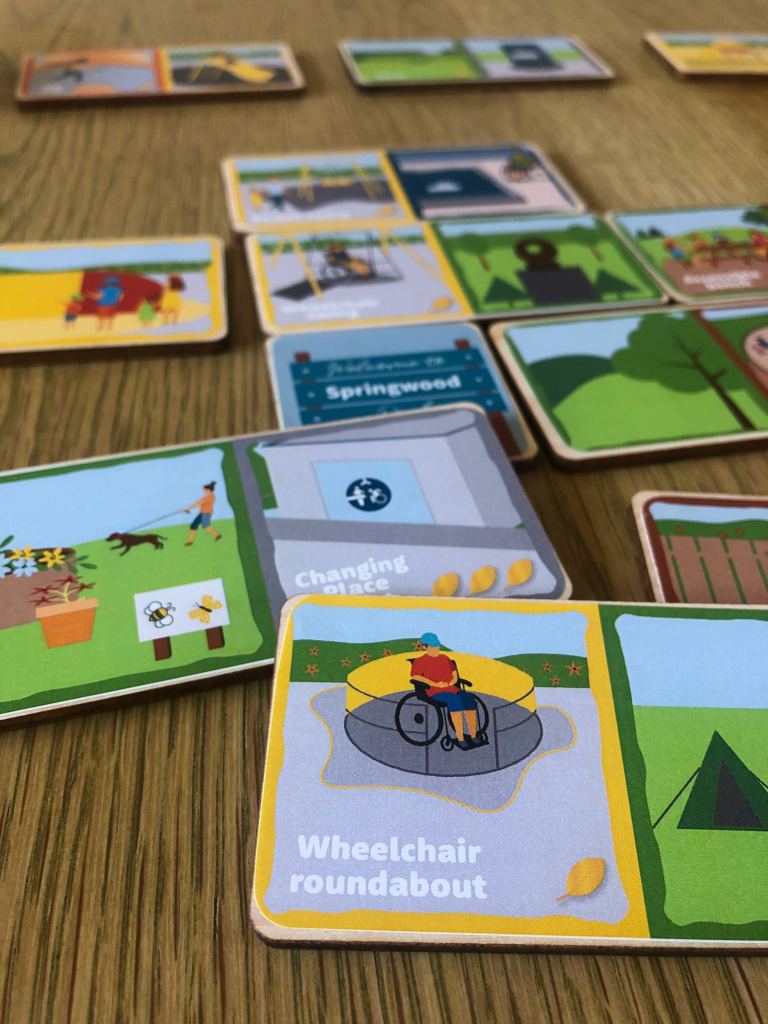
As part of my work as the graphic designer for Socialudo, we have developed a game called Domino Park with the aim to inspire discussion around what makes greenspaces (including play parks) accessible and inclusive. It’s a simple game where you collect dominos to build your own park. At the end the scores are tallied and the person with the most accessible/inclusive features gets the most points.
I hope it will be a useful tool for anyone taking on a similar project to the one we did, or for anyone looking to discuss the design and development of greenspaces. I would love to hear from you if you’re inspired to play the game!
There is a Print & Play version of the game on the Socialudo website for anyone to download and play for free. The Socialudo team would love to hear from you, and answer any questions. You can even arrange to try out a ‘giant’ version of the game!
Today is Rare Disease Awareness day which seems like an appropriate time to share a bit more about the journey we’ve been on with Quinns these last five months.
In September last year Quinns ended up in hospital experiencing a dystonic crisis. Dystonia or involuntary movements are common in Cerebral Palsy. He underwent a whole raft of tests in an attempt to establish the trigger for the crisis. The only way to control the movements, which were by this point causing him physical harm, was to heavily sedate him. With so many sedation drugs on board Quinns eventually needed help to breathe and was put on a ventilator.
The initial cause of the crisis was never established but in the process we discovered that his initial diagnosis was wrong. Rather than Cerebral Palsy, one of the most common childhood disabilities, Quinns actually has a very rare genetic neurodevelopmental condition called GNA01.
GNA01 was only discovered in 2013 and as such there are currently only about two to three hundred people with this particular genetic mutation in the world. It presents in one of two ways either as a movement disorder which looks very like cerebral palsy or as seizures. Sometimes people have both but in Quinns’ case it is simply the movement disorder.
It is obviously a shock to have an entirely new diagnosis after seven years. There’s a lot for us to get our heads around but what does it really change?
Cerebral palsy and the movement disorder caused by GNA01 are very similar. They both result in a disability requiring Quinns to use a wheelchair to get around and an eye gaze computer to communicate. He would have needed all the same equipment and support regardless of the name of the condition. The only thing that really changes is the narrative around his birth. His condition isn’t caused by brain damage but by a change in his genetic coding. There was absolutely nothing we or anyone else could have done when he was born to make his condition any different.
As in Quinns’ case the condition usually presents when a child has an extreme episode of dystonia or hyperkinetic movement which spirals out of control and leads to a long period in intensive care. This is known as a ‘Storm’. If we had known earlier that Quinns had GNA01 and that such a Storm was possible perhaps we could have been more prepared? But on reflection there is very little that I would have done differently for him in the years leading up to the Storm. His life was fun, social and fulfilling and we did everything possible to ensure that for his future.
Although cerebral palsy was the best explanation we were given for Quinns’ difficulties it never fully explained his condition. We now have a condition and a list of symptoms that describe Quinns’ difficulties with movement more exactly. Unfortunately we can’t rule out the possibility of future Storms but hopefully we will be better equipped to avoid them or at the very least deal with them when they arise. Our decisions moving forward can be based on knowing more about the condition we’re dealing with and hopefully more and more research will be carried out on this relatively new discovery.
Although we’ve yet to connect with them, Quinns is now part of a new small community of people with GNA01. There is a tribe of people who present almost exactly the same as him. One thing that struck me when I watched a video about some of the other children with GNA01 was how often their smiles are mentioned.
Quinns has been through a lot these last few months but he’s come out the other side the same smiley happy boy we all know and love. He attracts the attention of many passers by as he sits in his chair atop his hospital bed giggling away while he watches Thunderbirds for the 100th time. Big Sister is of course still his most favourite person.
I set up this blog a short while after Quinns was originally diagnosed with CP. The aim was to share our frustrations and struggles that we faced as a family simply because Quinns was a wheelchair user. Those frustrations and struggles remain the same. Accessibility and societal barriers are still a big problem for him. We still need access to Changing Places toilets to allow him to get out and about and accessible play parks are even more necessary now as he so deserves some fun after all he’s been through.
Hopefully once he gets out of hospital we’ll get back to sharing our life experiences again. In the meantime we want to raise awareness of GNA01 for the two hundred or so people living with the condition as part of the 300 million people living in the Rare Disease Community.



 Quinns, trains & changing places